The appeal of this land
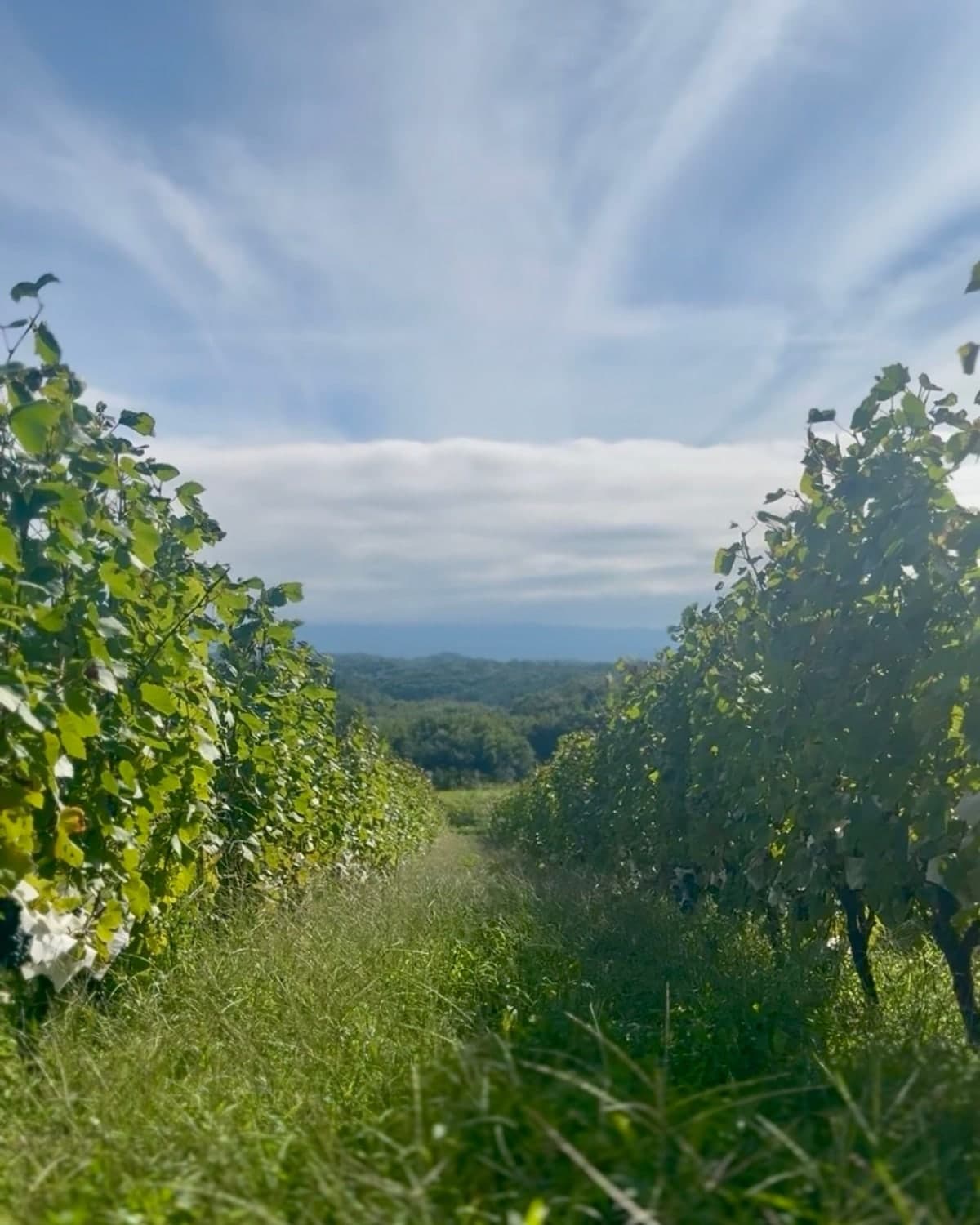
It is cool here, with a wide gap between day and night, and it gets good sun and good air. I want to work with what the site gives and grow fruit that ripens properly and makes good wine.
There is something of a hideaway about it. People who come often tell me what a good spot it is, how settled they feel here. I love this vineyard myself.
Someone who was worn down by work once came to lend a hand in the rows. As they left they said they felt restored, that they were glad they had come. That has stayed with me.
You work with your body, and yet what is left afterwards feels good. I feel that here too. I think this can be more than a place that grows grapes — somewhere to spend time in nature, let your shoulders down, and get your own strength back.
What I care about
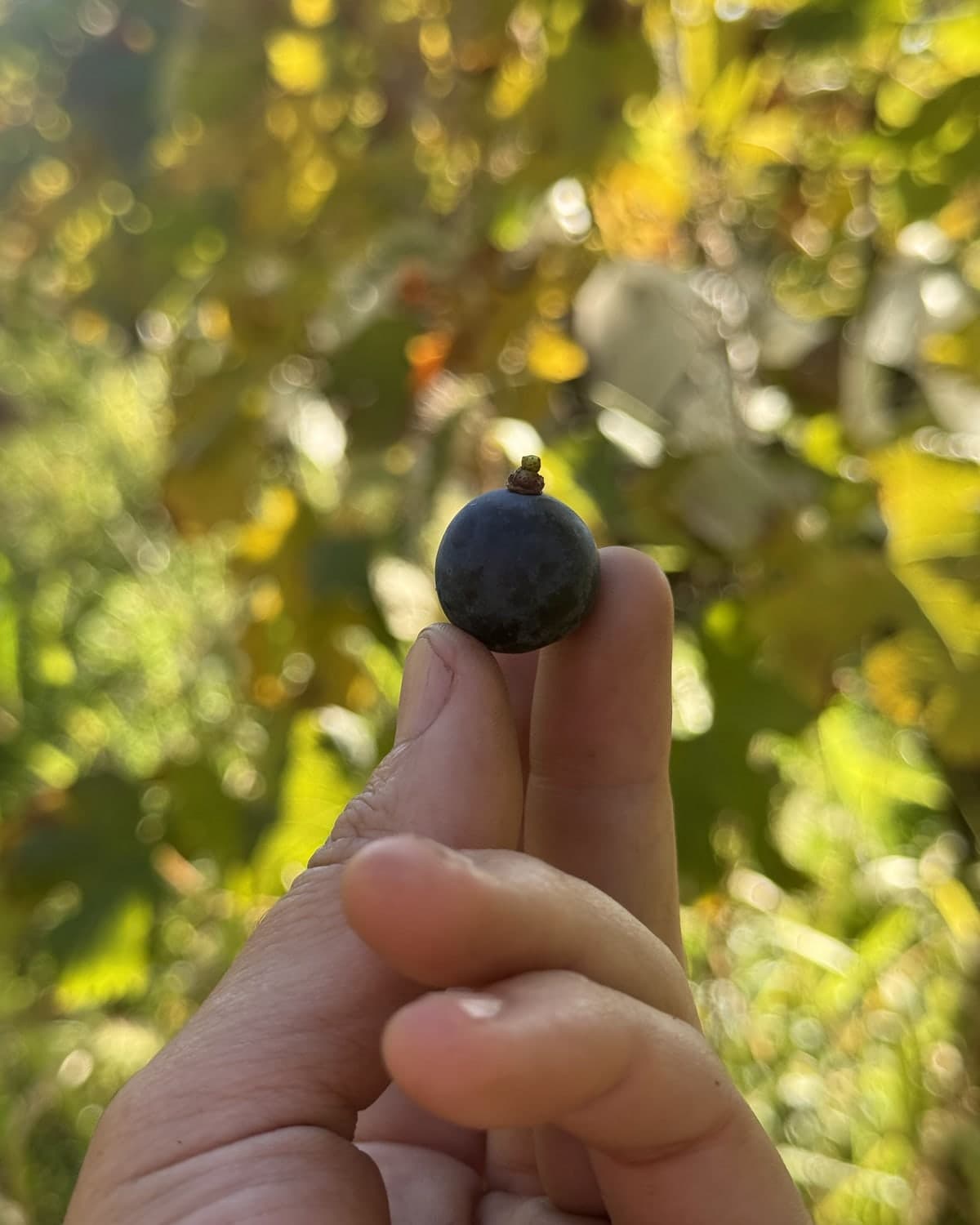
What I am after is small bunches and small berries with the flavour packed into them. So I do not cut the grass too hard — I let the grass take some of the water and the nutrients, and that keeps the vine from running to vigour. I hold the shoots and leaves back from growing away, keep the bunches and berries small, and aim for a concentrated taste.
The bunches sit low, and the top wire is at a height I can reach and work at. That leaves room for plenty of leaf in between, so the leaves do not shade each other and can take the light and photosynthesise properly. I want the fruit to ripen properly even in a cool place, so I work these things out in my own way.
The grapes are good to eat, but what I am looking at is the wine beyond them. What I want may not be what table grapes want. Besides sweetness and juiciness I am watching the acidity, the aroma, how ripe the skins and pips are. It is not that sour is good or tannic is good — I grow them thinking about how all of it will come together once it is wine.
Rather than take the largest crop from a small area, I would rather ask nothing unreasonable of each vine and grow small, complete bunches. Then, with a way of working I can actually keep up, widen the vineyard and get to the crop I need.
People sometimes say the wine is like a French wine, or that it tastes like proper wine. When I hear that, I feel what I have been aiming at is slowly taking shape.
What farming that lasts means to me
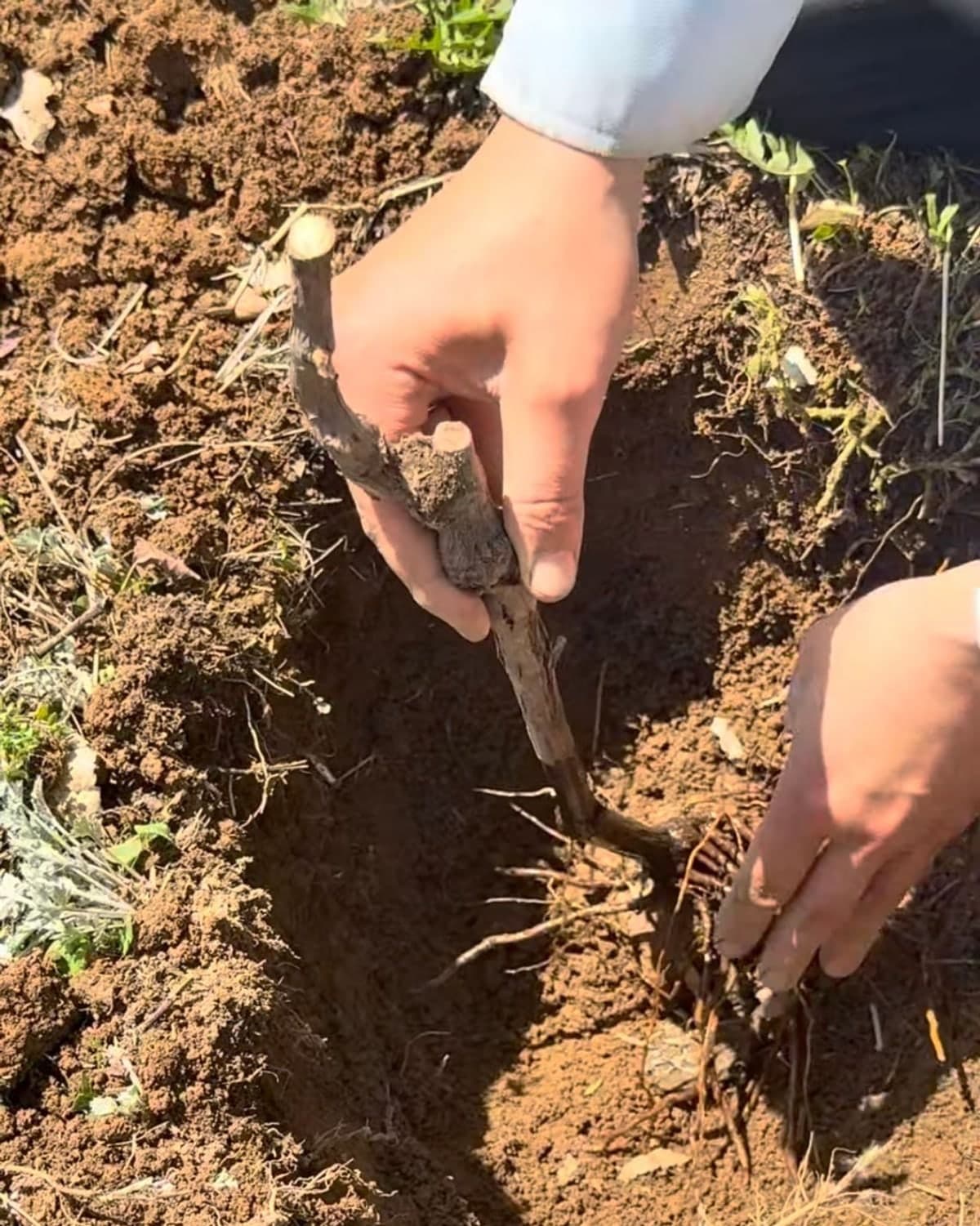
For me, farming that lasts is farming where the natural environment and the lives of the people working in it both go on for a long time. So I hold to three kinds of continuity: the vineyard, the people, and the money.
Turning abandoned farmland into vineyard means nothing if the land is not then kept in use. Through the association I want to work on both halves — restoring the land, and building a way for people to keep it going without being ground down.
The vineyard
I am working now on restoring the abandoned land around my own plots. It started when I realised that the neglected ground nearby was reaching my vineyard too — through animal and insect damage, through air that no longer moved.
What matters to me is setting the surroundings right, not only the inside of the vineyard. I have cut back the scrub that brings the damage and taken out trees where they needed to come out, so the vines grow healthy and the work stays manageable. Farming organically comes from the same wish: to make a vineyard that can keep going by working with what nature does.
But working with nature is not the same as leaving things alone. A vineyard has all sorts of insects and fungi in it. Rather than try to drive everything out, I think what matters is knowing what multiplies, under what conditions, and what actually harms the fruit.
One of the ways I do that is to change the variety row by row, and to train them differently as well. By combining vines that ripen at different times and stand up to disease differently, I want to cut the risk of one problem sweeping the whole vineyard at once. I first learned about changing variety by row at Domaine Oyamada, where I am still training. Since managing a vineyard myself, I have come to feel how much it matters.
With insects too, I start by learning how they live. The larvae of the ghost moth and the clearwing moths, for instance, bore into the trunk and can weaken or kill a vine. I look into when and how each of them gets in, and adjust accordingly — timing the mowing to the insect, or stripping the rough bark.
For the plume moth larvae that get into the bunches, I watch for when they emerge and when they lay. I have raised larvae at home to see them emerge. Conditions at home are not the conditions in the vineyard, but it tells me it is about time to start looking closely out there.
By knowing the living things and setting the vineyard and its surroundings right, I want to keep adding to what I can prevent in the ordinary run of the work, instead of always chasing damage once it has got away from me.
The people
To keep a vineyard going for a long time, the people in it have to be able to keep working without being worn out. People sometimes ask me what I will do about labour as the vineyard grows. I have several ideas, and one of them is working with welfare providers — farming and welfare together.
There is a great variety of work in a vineyard. And there are people looking for a place to work that suits them, or for a way into being among others. I want this to be somewhere people can take part in the work in a shape that fits what they want and what they are good at — including people who have lived withdrawn from society, and people who are neurodivergent.
I have been diagnosed as neurodivergent myself. I believe that with the right conditions, a person can do fine work whatever their make-up. What someone is good at, and what conditions let them work comfortably, differ from person to person. Talking it through with welfare providers, I want to make this a place where each person can put their strengths to use without strain — a place where you can do what you are capable of and feel connected to other people.
I also put effort into video, into showing how I think about growing and what the days here are like. This year three groups of people from outside the prefecture, who had seen the videos, came to help with the work in order to learn. Some of them want a vineyard of their own, and are considering Komoro as a place for it.
By keeping this up, I think I can add to the number of people who want to grow grapes in Komoro, and the number who come regularly from elsewhere and stay involved. I am aiming for a place people can keep being part of, in a way that does not ask too much of them.
The money
If the vineyard is to be looked after and people are to stay involved, those working here have to be paid properly and be able to live on it. So alongside selling wine, I want to build experiences and chances to learn in the vineyard. The ownership project is one such arrangement — a way to enjoy this place and the making of the wine while supporting the vineyard over time.
What that earns goes to paying the people, keeping the vineyard, and restoring the next piece of land. People gather on restored land, work and income come from it, and that in turn keeps the vineyard going and growing. By building that cycle, I want a kind of farming in which the environment, the people and the money all carry on together.
What I want to build here, with everyone who takes part
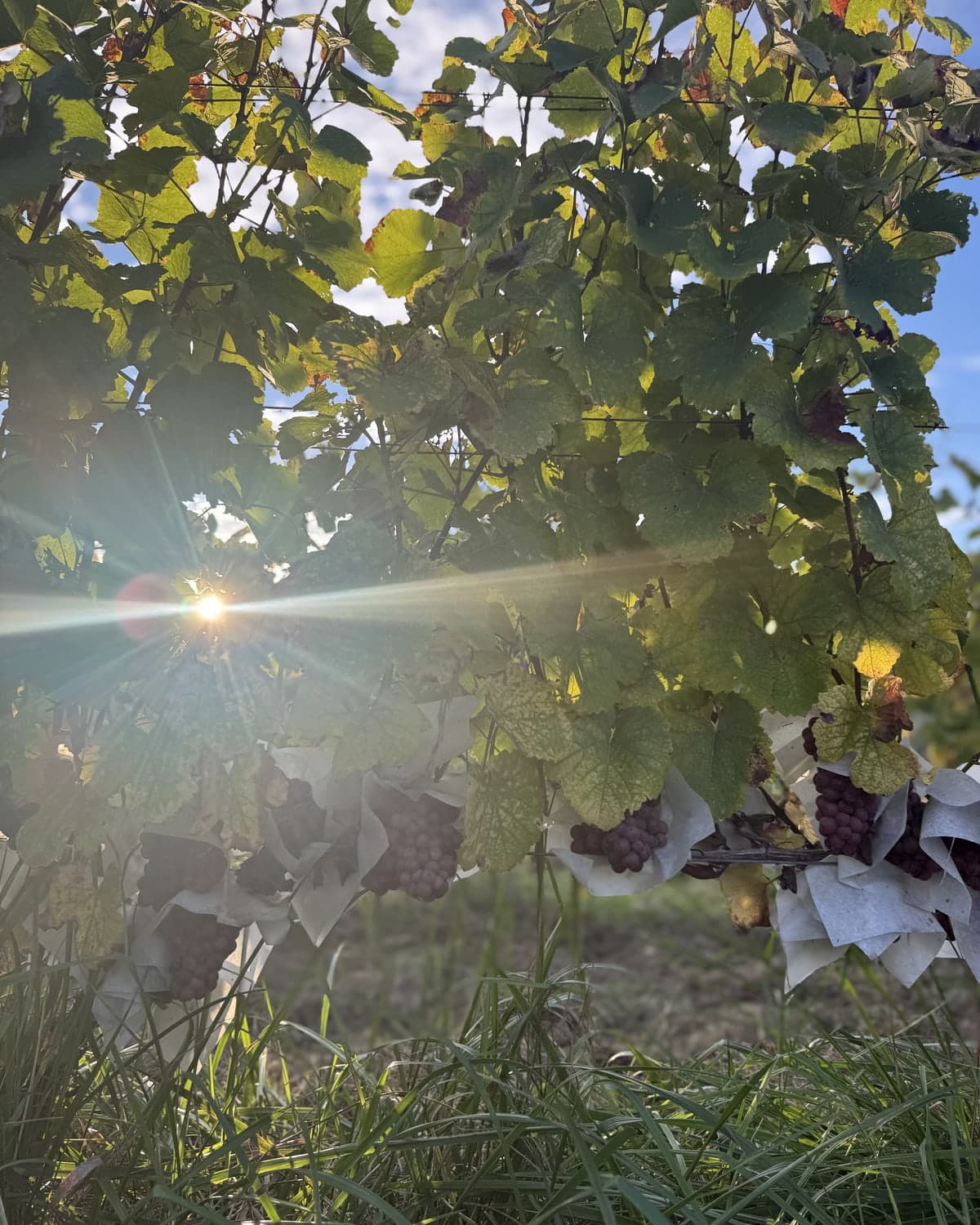
I would like those who join as owners to feel that there is a vineyard out there they can go and visit. To spend time together in the open, walk the rows, taste the fruit, join the harvest. I would be glad if you enjoyed the whole way from that fruit to the wine arriving in your hands.
I want it to be somewhere you can come when you need to step back from a busy life and breathe. And for those who are far away, I want to set up a way to see the vineyard online. I hope you will wonder how the year is coming along, and be as fond of it as you would be of your own patch of land.
When you drink the wine that reaches you, I hope the time you spent here and the look of that year's fruit come back to you — the sense of making the wine together, and the pride of having had a part in bringing abandoned land back and passing this view on.
And anyone who wants to start a vineyard of their own on this land is welcome. Whether you support the place as an owner and enjoy it, or become a fellow grower, I would be glad to have you here in whichever shape suits you.
What I am after is organic growing and farming that lasts. I want to build this vineyard alongside people who find something in this land and this fruit, and who feel the same way about it. I want this place I love to matter to the people who take part in it too, and to leave it to the next generation.